Showing posts with label Military. Show all posts

Wednesday, 10 October 2018

40s Reenactors at Bletchly


We visited Bletchley Park on a 40s themed weekend.  People were encouraged to come in costume and there were plenty who did.  Reenacters are always happy to pose, particularly if you approach them early in the day, before they have had dozens of requests from photographers.  It was however a very sunny day and the light was too harsh for decent portraits.


Tuesday, 9 October 2018

Bletchley Park

I recently joined some other CCC members for a visit to Bletchley Park.  During the 2nd World War this was the home for the codebreakers who de-cyphered the German Enigma and Lorenz codes.  The contribution this made to the Allied war effort was immense.  An oft repeated estimate is that it shortened the war by 2 years, and thus saved millions of lives.  Churchill, described the Bletchley team as 'the geese that laid the golden eggs and never cackled'.

According to Ann, who has been a couple of times in past years, the site has undergone a huge transformation.  The once decaying codebreaker huts have been fully restored and dressed to resemble how they would have been during the war.  Recorded voices, projections and interactive media all help to tell the story of the work done there.

The huts are kept very dark, blackout blinds keep sunlight from damaging the artefacts and only a few dim bulbs light the interiors.  Photography was tricky to say the least.  I decided to convert most of the hut images to monochrome and gave a few an old photo treatment in Nik Analog Efex.

The mansion house was much better lit, but lacked the atmosphere of the huts. I was also keen to get a shot of the recreation of Turing's 'Bombe', the electro-mechanical calculating engine that help speed up the code-breaking process.


Friday, 14 September 2018

Shuttleworth Heritage Day

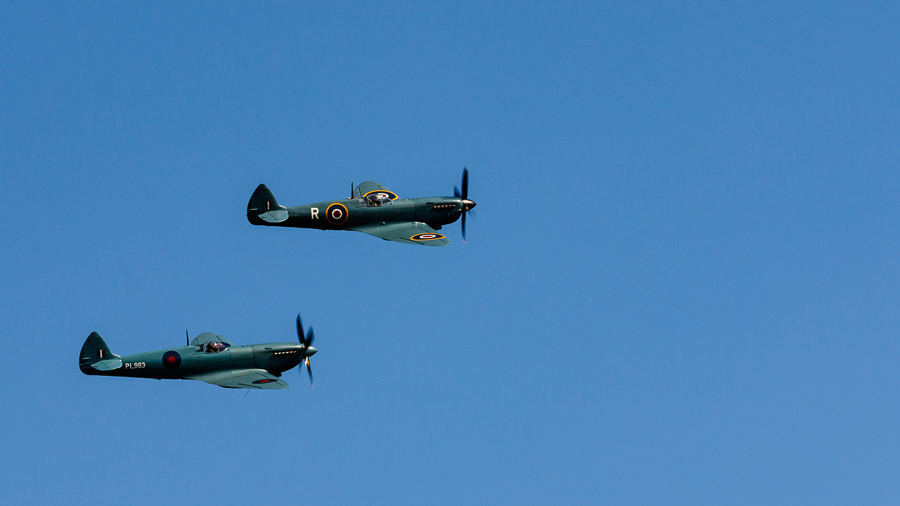
I met some other CCC members at the recent 'Heritage Day' at the Shuttleworth  Collection.  It was the first time I had been to a flying day at Shuttleworth in a few years.  The weather was great with a clear sky.  The planes flying included two visiting Mk XI reconnaissance spitfires and the collection's own Mk V Spitfire.  The Mk V has returned to the skies this season after a 10 year refit.  Unusually, it sports clipped wing tips, which apparently improve roll rate.  I ended up shooting a lot of frames, and have spent the last couple of weeks slowly sorting through them.  Here is a selection.


Saturday, 2 April 2016

Colours and Textures at RAF Barnham

During our trip to RAF Barnham, all of the photographers were drawn to the wonderful patternation on the decaying steel doors of the hutches.  In a couple of cases the original doors had been removed and stored inside the hutch, to protect it from further weathering.  In those cases a new door had been fitted with a photo reproduction of the original door's weathered look.


Thursday, 31 March 2016

RAF Barnham

A few weeks ago I joined other CCC members for a trip to the former RAF Barnham.  Now an industrial estate, and a scheduled historic monument, during the 50s/60s, RAF Barnham was one of two storage locations for Blue Danube, Britain's first nuclear bomb.  Blue Danube was a physically large, 'Manhattan Project' era technology, bomb, intended to be delivered by the V-bombers (Valiant's, Victors & Vulcans).  Theses bombs required constant maintenance, hence the central storage.

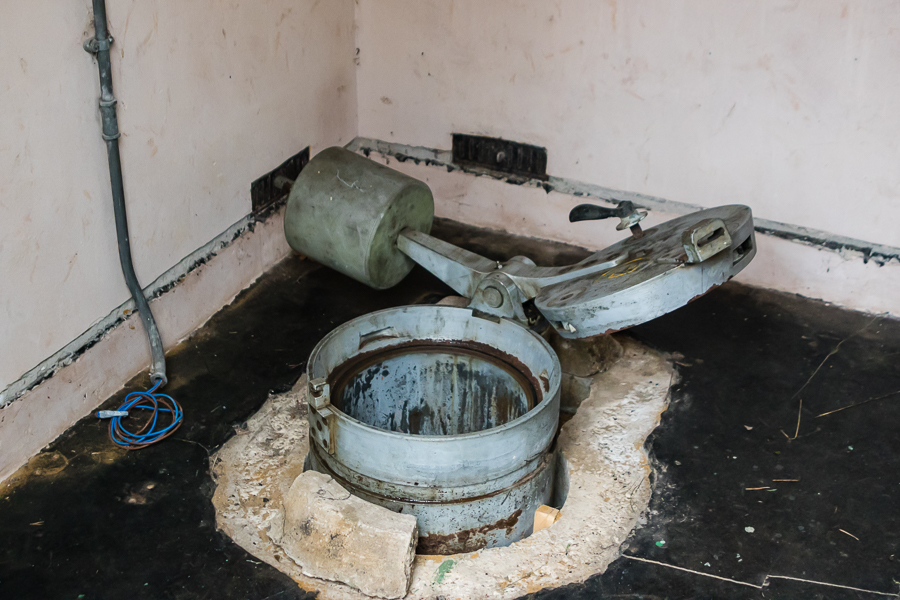
Inside a double fence, Barnham was roughly pentagonal in layout.  There were three main buildings, each surrounded by an earthwork banking.  These stored and maintained the bomb casings and the high-explosive elements of the weapons.  Additionally, there were 55 small storage buildings, called 'hutches', that held the fissile cores. Today, the two remaining main buildings (one burnt down in the 80s) and the ancillary buildings are used for light industry.  The double fence, guard towers and hutches have been maintained and where possible restored, as part of the obligation to historic monument status.  Three of the four guard towers have been restored to their original condition, as have a couple of the hutches which have had the inner storage safes replaced.  Much of the work has been done by the firms who rent space within the site.